When a smartphone heats up during charging, the cause lies in electrical power conversion and battery management design. Charging is an active electrical operation in which incoming power must be regulated, converted, monitored, and safely distributed within the device.
Heat generation during this process is expected to a controlled extent. However, excessive heat usually indicates inefficiency or increased stress within the charging system.
Modern smartphones operate with tightly packed components, limited thermal dissipation area, and high charging power demands. As charging speed and power density increase, thermal management becomes a critical design constraint. Understanding why heat is produced requires examining how electrical energy is processed from the charger to the battery.
Why does this problem happen?
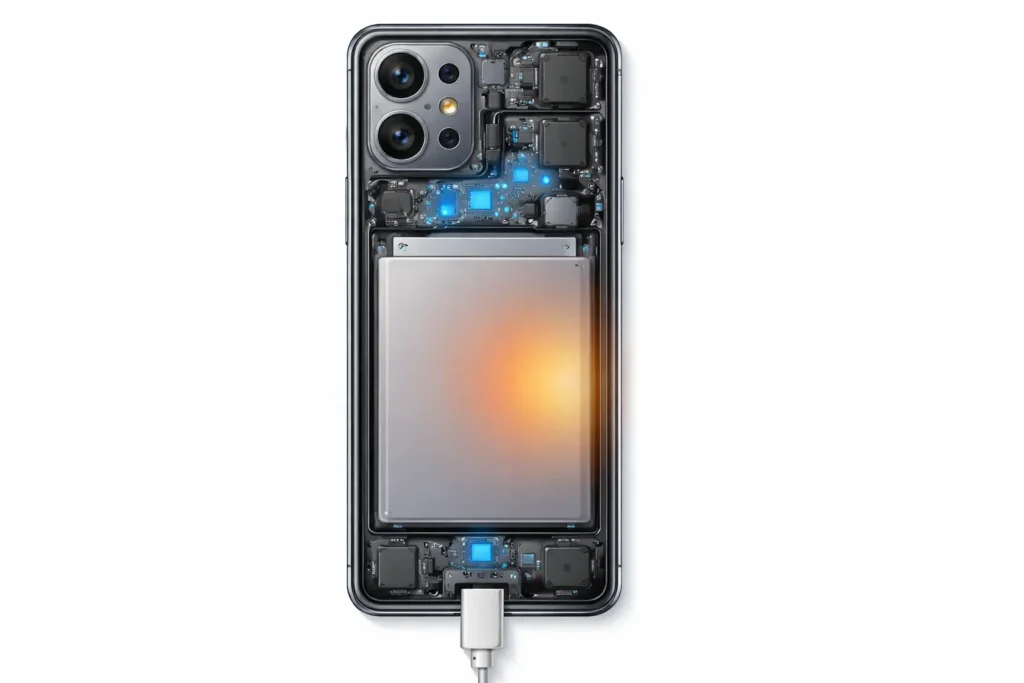
The primary reason phones heat up during charging due to power conversion losses within the charging circuit. Electrical power from the adapter enters at a higher voltage than the battery can accept, so the charging controller reduces voltage and regulates current. This process is not fully efficient, and excess energy is released as heat.
Fast charging increases thermal output by allowing higher current during the initial charging phase. Higher current flowing through internal resistance in charging ICs, connectors, internal traces, and protection circuits results in increased heat generation.
Battery aging further contributes to heating. As lithium-ion batteries degrade, internal resistance rises, causing a larger portion of incoming energy to be dissipated as heat rather than stored as charge.
Unstable power delivery from low-quality adapters or degraded cables increases compensation activity within the power management system, raising internal heat. Limited heat dissipation due to passive cooling and restricted airflow allows this heat to accumulate, leading to higher surface temperatures.
How to reduce or fix this problem?
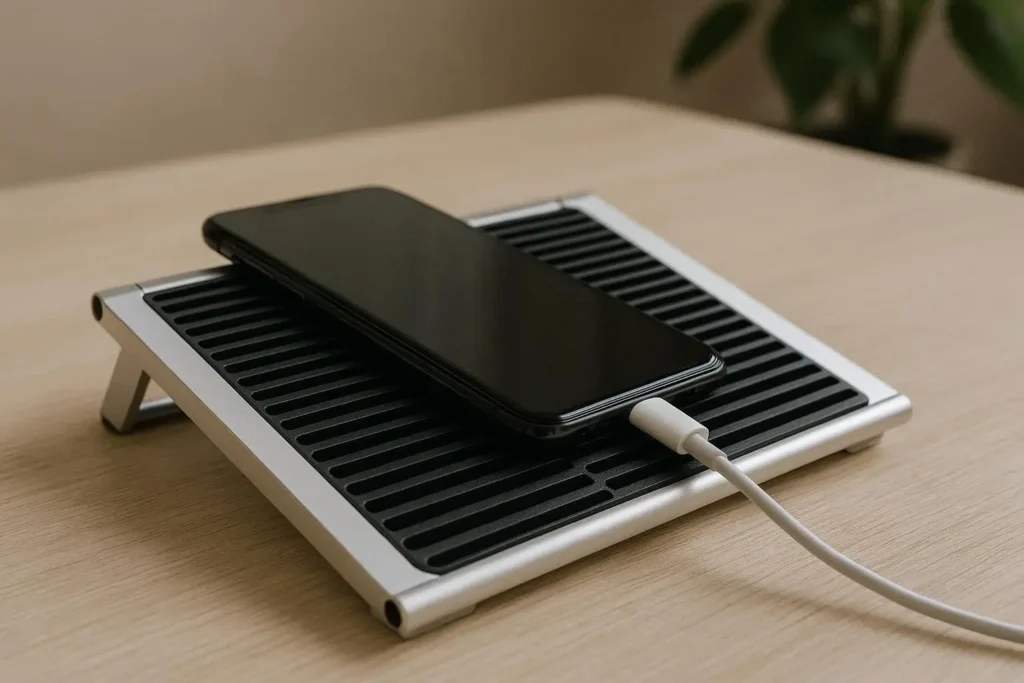
Thermal output during charging can be reduced by minimizing electrical inefficiencies and improving heat dissipation. Using a charger that meets the device’s specified voltage and current requirements keeps the charging controller operating within its optimal efficiency range. Inferior cables increase resistance at the connector, leading to localized heating and increased internal load on the charging circuitry.
Physical placement during charging directly affects thermal behavior. Charging on flat, hard surfaces allows heat to dissipate through conduction and air convection. Soft surfaces restrict airflow and trap heat beneath the device, increasing surface temperature. Removing insulating phone cases during charging reduces heat retention and improves surface cooling.
Reducing system load during charging lowers combined thermal stress. Processor activity adds heat independent of charging. Disabling unnecessary background operations allows the thermal management system to focus primarily on charging-related heat. Using lower-wattage chargers or disabling fast charging spreads energy transfer over a longer duration, thereby reducing peak thermal density.
Maintaining a clean charging port improves electrical contact and reduces resistance. Even minor debris increases resistance at the connector interface, which leads to additional heat generation. Software updates can also contribute indirectly by refining charging curves and thermal throttling behavior implemented at the system level by the manufacturer.
When replacement becomes necessary
Persistent overheating during charging under controlled conditions suggests hardware degradation. A battery with elevated internal resistance will generate excessive heat regardless of charging environment or accessories used. In such cases, replacement becomes a practical consideration rather than a performance upgrade.
Battery replacement should be considered when charging heat is accompanied by rapid discharge, voltage instability, or physical deformation. These indicators point to chemical degradation that cannot be resolved through usage adjustments. Continuing to operate a degraded battery increases thermal stress on surrounding components and accelerates overall device wear.
Charging adapters can degrade over time due to component aging and thermal stress. An adapter that becomes excessively hot or delivers inconsistent power output may no longer regulate voltage efficiently under load. Replacing it can restore stable power delivery and help reduce internal heating within the phone.
Conclusion
Phone heating during charging results from electrical inefficiency, battery resistance, and high thermal density within a compact device. While moderate heat is a normal outcome of power regulation, excessive or persistent heating signals inefficiency or component aging. By optimizing power delivery conditions and monitoring battery health, overall thermal stress can be managed effectively. When heating persists despite these measures, component replacement becomes a logical preventive step rather than a reactive repair.