Why Phone Battery Drains Overnight
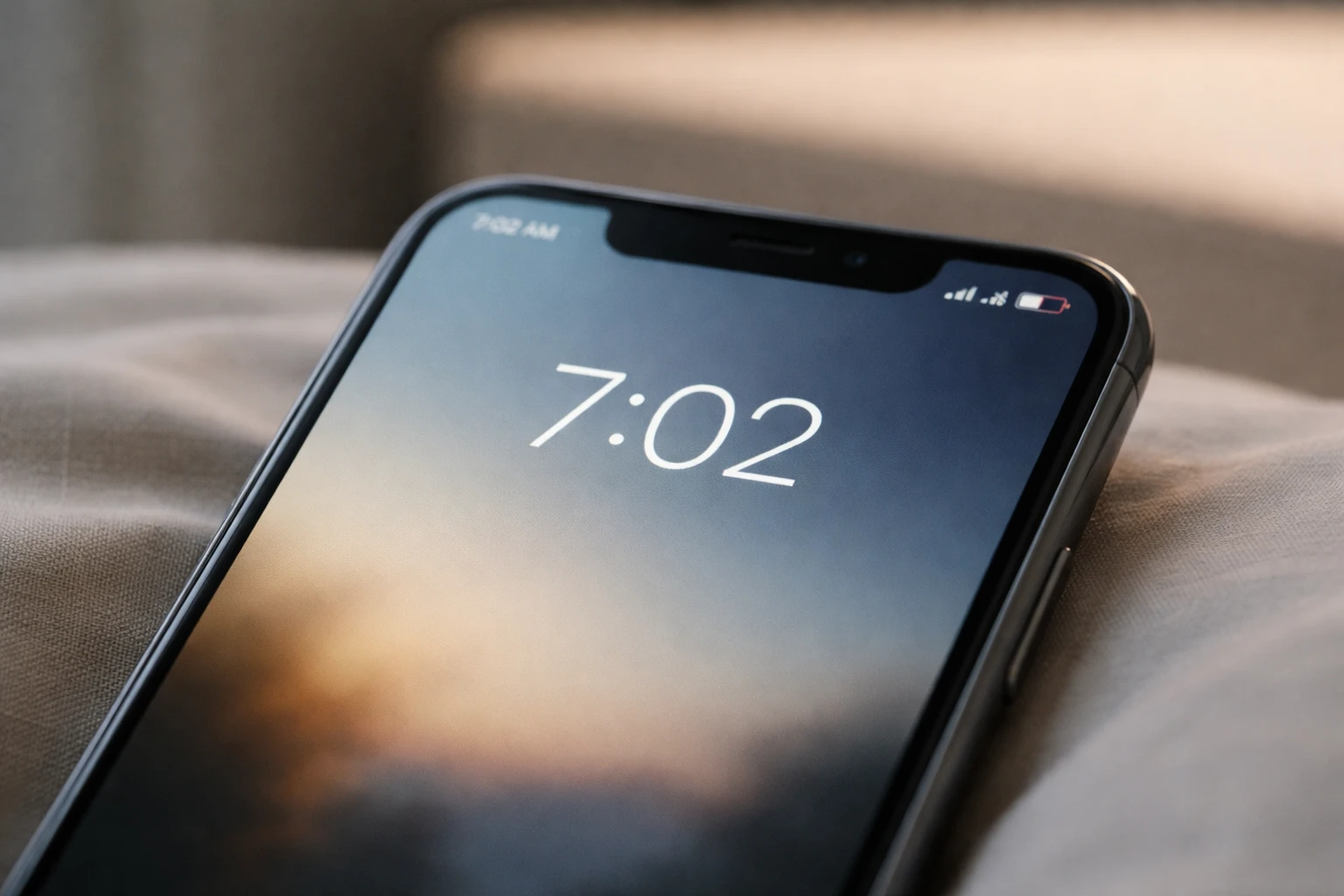
A smartphone battery draining overnight is not a mystery of usage but a consequence of how modern operating systems, radios, and power controllers behave during idle states. Even when the screen is off and the device appears inactive, the phone remains partially operational. Power is continuously allocated to maintain system stability, network connectivity, and scheduled background tasks. Overnight drain is therefore primarily an efficiency issue rather than a result of user activity.
Why does this problem occurs
The primary cause of overnight battery drain is incomplete idle state entry. Smartphones are designed to enter a deep sleep mode when inactive, but this state is conditional. Any background process that triggers CPU wake cycles prevents the device from reaching its lowest power consumption level. These wake cycles may last only milliseconds, but repeated interruptions across several hours result in measurable battery loss.
Network radios are a major contributor. Cellular modems constantly negotiate signal strength and tower handovers. In low-signal environments, transmission power increases to maintain connection, significantly raising idle power draw. Wi-Fi instability causes repeated reconnect attempts, while Bluetooth background scanning adds additional radio activity. These processes operate independently of user interaction.
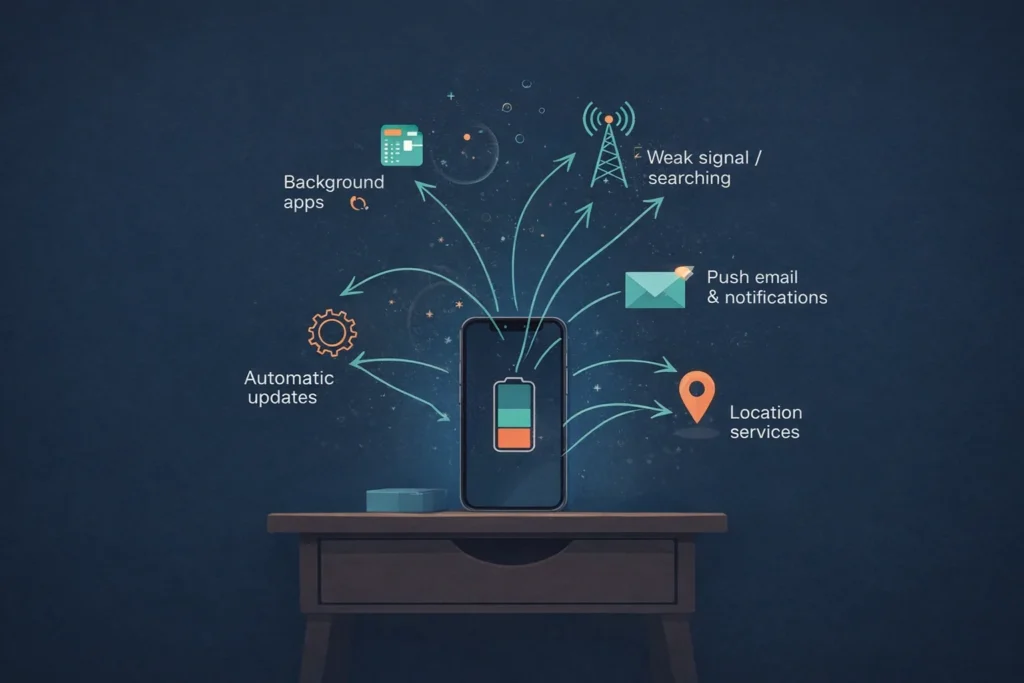
Software-level scheduling also plays a role. Operating systems batch background tasks such as app sync, system maintenance, notification delivery, and security checks. Poorly optimized applications may bypass sleep restrictions, holding partial wake locks that keep system components active. This behavior prevents the power management unit from shutting down nonessential subsystems.
Battery characteristics amplify the issue. Lithium-ion batteries experience natural self-discharge due to internal chemical reactions. As batteries age, internal resistance increases, causing higher energy loss even at low current draw. Overnight drain becomes more noticeable not because usage increases, but because storage efficiency decreases.
Thermal conditions further influence power retention. Elevated temperatures accelerate chemical activity inside the battery, increasing leakage. Devices placed in warm or poorly ventilated environments are more likely to lose charge during idle periods.
How to fix this issue
Reducing overnight drain requires minimizing idle interruptions rather than eliminating usage. Stable connectivity is critical. A strong, consistent Wi-Fi connection allows the phone to reduce cellular modem activity. Disabling unnecessary radios limits background negotiation cycles and lowers baseline power consumption.
Background execution should be constrained. Applications that do not require real-time updates should be restricted from background operation. This allows the operating system to consolidate tasks and maintain longer deep sleep intervals. System and application updates should not be delayed, as power management improvements are frequently delivered through firmware and software optimization.
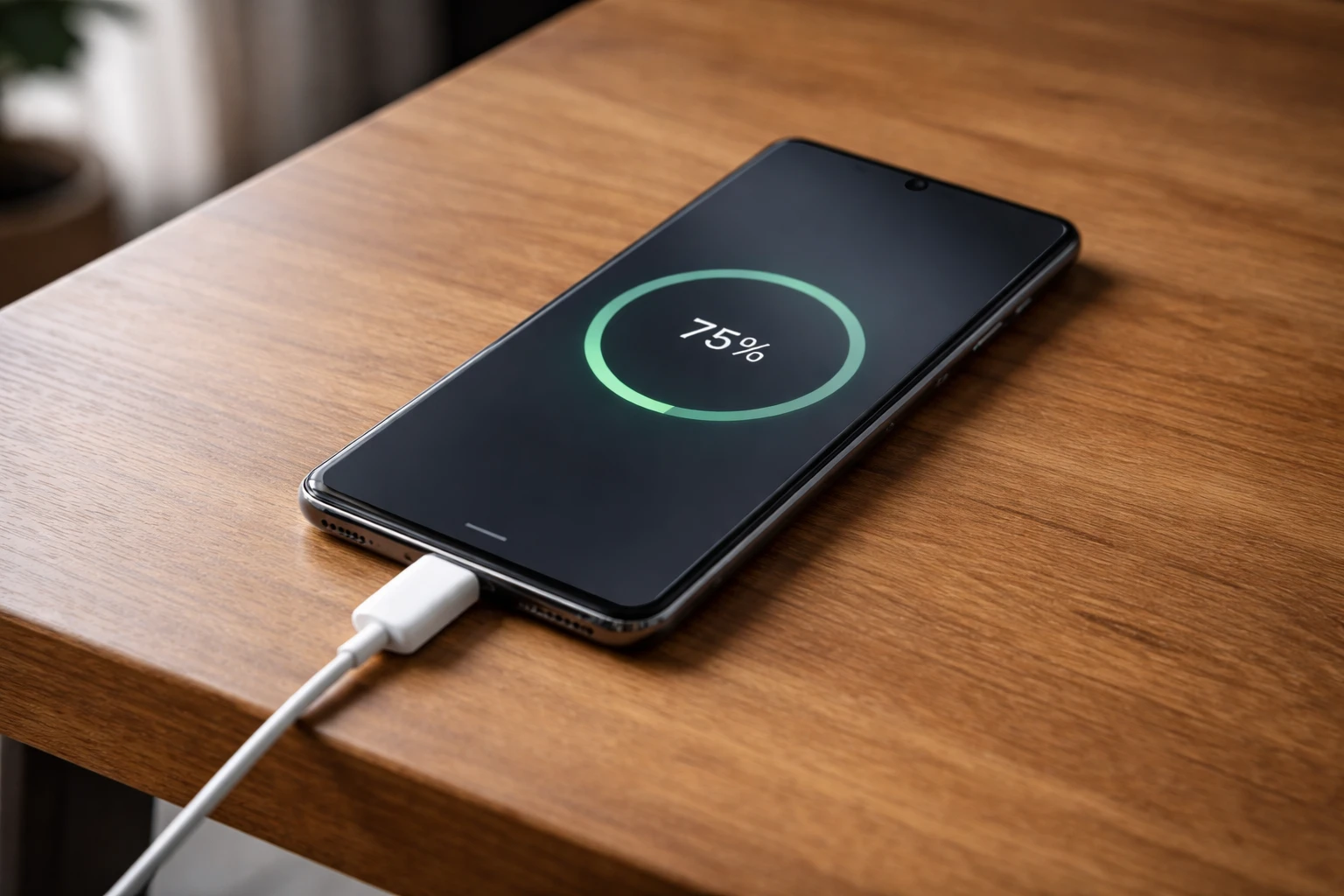
Charging behavior affects overnight efficiency. Phones left connected to power continue thermal regulation and charge balancing operations after reaching full capacity. Disconnecting once fully charged reduces heat generation and limits background charging control activity.
Physical conditions matter. Keeping the device in a cool, open environment reduces thermal stress and improves battery stability. Heat retention during idle periods increases chemical loss and reduces energy retention efficiency.
When replacement is needed
When overnight battery drain remains excessive despite stable connectivity, restricted background activity, and controlled thermal conditions, battery degradation is the likely cause. A battery that loses a large percentage of charge overnight under minimal system load indicates elevated internal resistance.
Replacement should be considered when overnight drain is accompanied by rapid daytime discharge, inconsistent battery percentage reporting, or unexpected shutdowns during low load. These symptoms indicate reduced charge storage capacity rather than software inefficiency. Battery replacement in such cases restores normal idle behavior and power retention.
FAQ
Is overnight battery drain unavoidable?
Yes. A small percentage loss is normal due to background system activity and battery chemistry.
Does turning the phone off stop overnight drain completely?
Yes. Powering off eliminates system activity, unlike standby mode.
Can software alone fix severe overnight drain?
No. Software adjustments cannot compensate for degraded battery chemistry.
Conclusion
Overnight battery drain is the result of sustained low-level system operation combined with battery aging and environmental factors. Smartphones are designed to remain partially active even during idle periods, and power loss reflects efficiency limits rather than misuse. While optimizing connectivity, background execution, and thermal conditions can significantly reduce overnight drain, battery wear ultimately determines long-term idle performance. Understanding this distinction helps separate normal behavior from hardware-level decline.

0 Comments