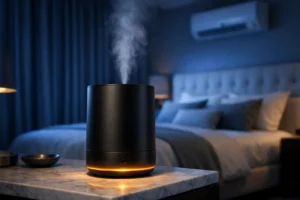
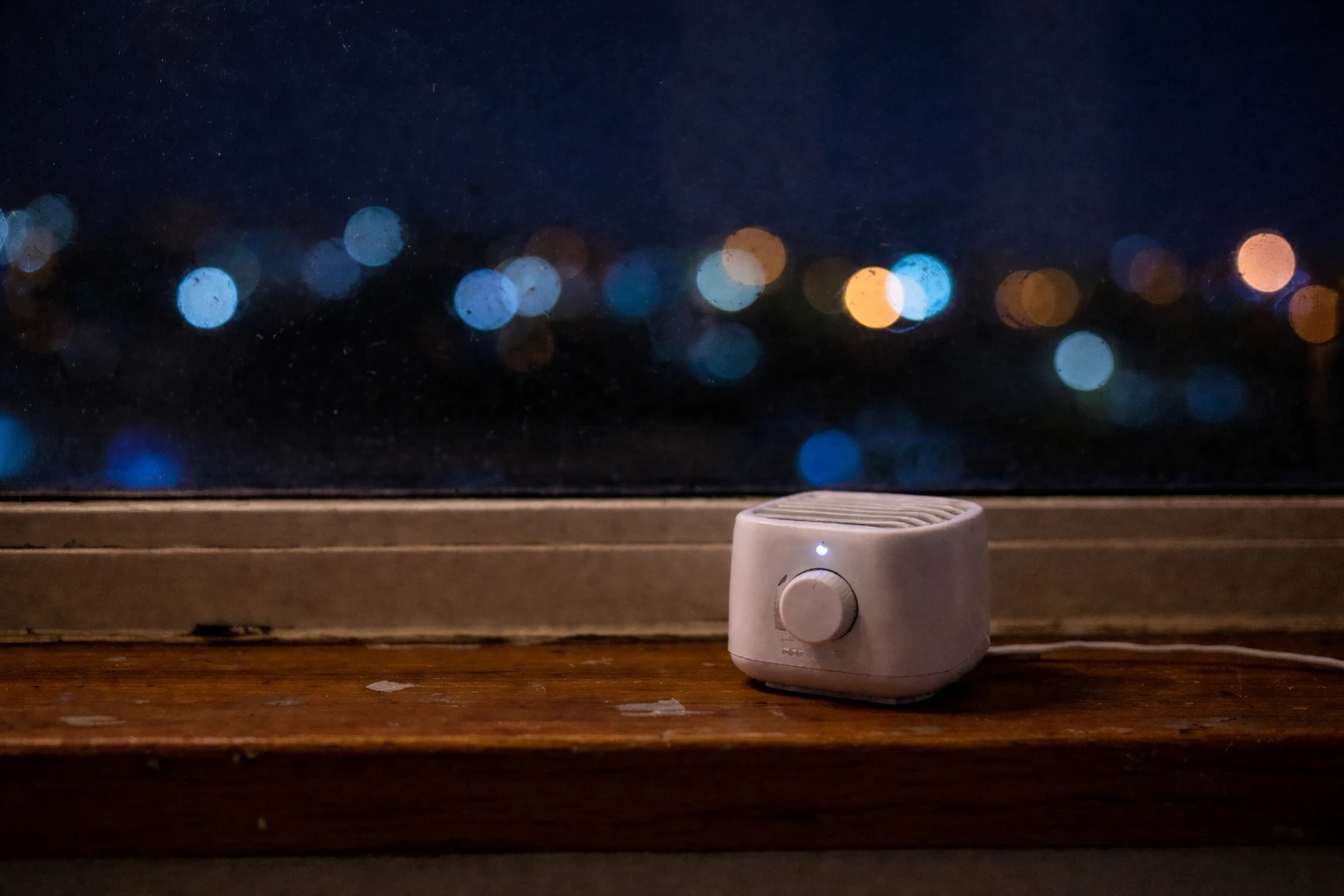
The reason for waking up at night is often not a loud noise. The problem is small, sudden, and unpredictable sounds. The mechanical click of the elevator, the gentle thud of the neighbor’s door, the faint sound of traffic coming from a distance. All these are so subtle that they are not even noticed during the day, but in the silence of the night, they feel more noticeable. This is where a white noise machine can make a difference.
How a white noise machine actually works
A white noise machine produces a steady background sound that stays consistent through the night. It might sound like static at first, but it’s actually a blend of frequencies that create a smooth, even layer of sound.
Its purpose is simple. It makes sudden noises less noticeable. In a completely quiet room, even a small sound can feel sharp and interrupt sleep. But when there’s already a steady sound in the background, new noises don’t feel as isolated. They blend in more, which makes them less disruptive.
Take a simple example. If a pen drops in a completely quiet room, you’ll notice it right away. If the same pen falls while a fan is running softly in the background, it won’t feel as sharp.
A white noise machine works in a similar way. It adds a steady background sound to the room, so small disturbances don’t stand out as much.
White Noise, Pink Noise, and Ambient Sound Options
Not every white noise machine produces the same kind of sound. Pure white noise contains all frequencies at similar levels, which is why it can sometimes resemble static. Pink noise emphasizes lower frequencies slightly more, making it feel deeper and softer to some listeners.
Many devices also include sounds like rain, ocean waves, forest ambience, or a soft fan. These aren’t technically white noise, but they create a steady background that helps sudden disturbances feel less sharp.
Choice is highly personal. Simple, non-distracting tones often work better for light sleepers. If the sound itself starts drawing attention, it defeats the purpose.
Urban Life and Micro-Disturbances
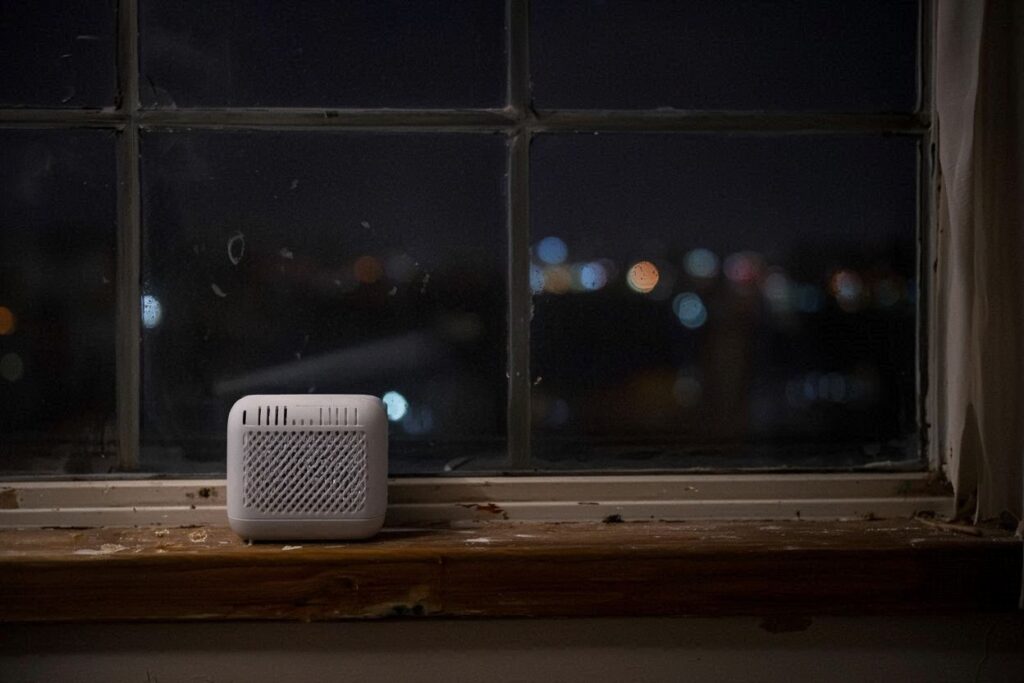
City living rarely offers complete control over your surroundings. You can dim the lights and close the door, but you can’t control the building. Someone comes in late. A vehicle stops outside. A hallway door opens.
The issue isn’t that cities are loud all the time. It’s that you don’t control the timing. That lack of control is what makes sleep lighter for some people.
White noise, in this context, isn’t about blocking sound. It’s about not having to react to every change in the environment. For apartment dwellers and people in shared spaces, that can make a practical difference.
The same logic applies while traveling. Hotels don’t sound like home. Different systems, different walls, different rhythms. A portable white noise machine doesn’t change the building, but it can make the room feel less unfamiliar.
Parents and Infants
Many parents use white noise in a baby’s room for a simple reason. Everyday household sounds such as utensils, doors opening, or conversation from another room can interrupt an infant’s sleep. A soft background sound can make those small changes less noticeable.
At the same time, caution is important. The volume should stay low, and the device should not be placed too close to the crib. The goal is gentle, steady sound, not loud masking.
Does It Have the Same Effect on Everyone?
White noise doesn’t work the same way for everyone. Some people are naturally deep sleepers and may not notice much difference. For those who are easily disturbed by small noises, it can be more useful.
That said, white noise isn’t a solution to every sleep problem. If your sleep issues are linked to stress, anxiety, or an irregular routine, background sound alone won’t fix them. It can help, but it isn’t a replacement for healthy sleep habits.
Volume, Placement and Habit Formation
White noise works best when it blends into the background. If the volume is too high, the machine itself can become distracting. The sound should be low enough to fill the room but subtle enough not to draw attention.
Placement also matters. Keeping it near the bed is convenient, but it shouldn’t be too close to the ear. Some people prefer using a timer, while others leave it running through the night. For many, a continuous sound feels more stable.
With regular use, the sound can become part of a routine. When the machine turns on, it can signal that it’s time to wind down.
You can also check our simple warm light habit before bed article if you are adjusting your nighttime setup.
White Noise vs. a Simple Fan
Many people say they sleep better with just the sound of a ceiling fan. The reason is similar. A steady background sound can make small disturbances less noticeable.
The difference is control. With a white noise machine, you can choose the type of sound and adjust its level. A fan’s sound depends on its speed, and that can vary. A dedicated machine is designed to stay consistent throughout the night.
Some people prefer sound-based solutions like white noise, while others switch to simpler bedside tools. In fact, many are moving away from phones at night and bringing back the analog alarm clock as a distraction-free alternative.
Also worth reading: The Analog Alarm Clock Is an Underrated Bedside Gadget at Night.
Final Insight
A white noise machine can help with minor nighttime disturbances, especially for people who are easily affected by environmental sounds. It doesn’t replace silence, but it can make the room feel more manageable. Sudden noises may not seem as sharp, which can mean fewer interruptions during the night.
It isn’t a miracle device, but it can be a practical tool in the right situation. In urban bedrooms, where unpredictability is common, a steady background sound can be genuinely useful for some people.