
Most people don’t buy smart home gadgets to save money.
They buy them for convenience.
For comfort.
For that subtle feeling of stepping into a more modern way of living.
But over the past few years, something unexpected has been happening inside connected homes.
Energy bills are shrinking.
Emergency repairs are becoming less frequent.
Invisible waste is finally being detected.
Daily micro-decisions are being handled automatically.
And many homeowners never fully realize that these quiet financial improvements are being driven by the devices around them.
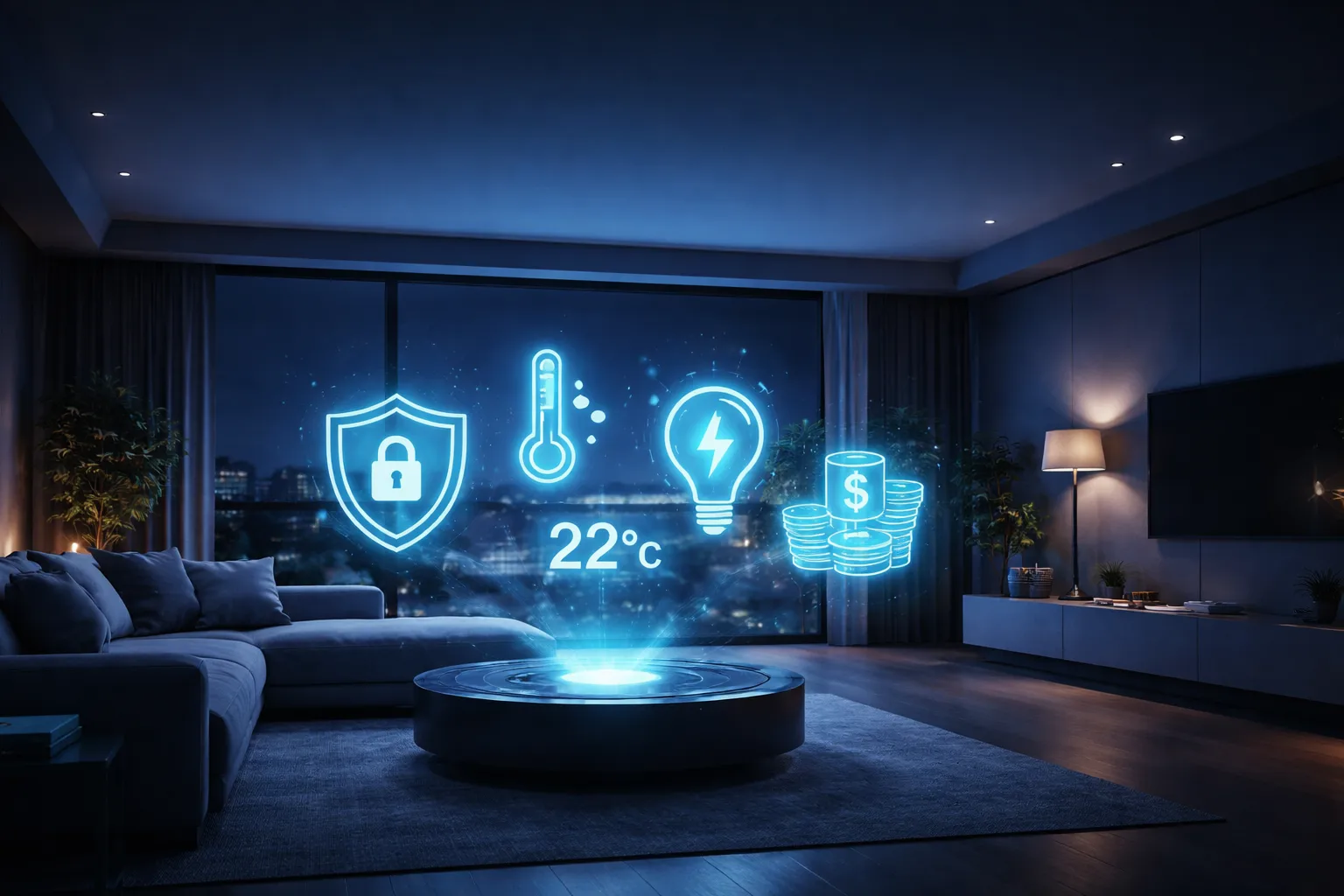
In 2026, the smartest homes are no longer just automated.
They are financially intelligent systems working silently in the background.
Smart Thermostats Are Cutting Energy Bills Without Lifestyle Changes
Heating and cooling have always been among the most underestimated expenses in modern homes. Traditional thermostats react only when someone manually adjusts the temperature, often leading to inconsistent usage and unnoticed energy waste.
Smart thermostats work differently. They observe occupancy patterns, respond to real-time weather changes, understand how quickly rooms gain or lose heat, and continuously fine-tune energy consumption. Over time, this creates an efficiency level that most homeowners would struggle to maintain manually.
What makes this shift particularly interesting is the psychological impact. Comfort levels rarely decrease. In many cases, they improve. Temperature management takes a backseat, while electricity bills begin to decline gradually and consistently.
Smart Energy Monitors Are Rewiring Everyday Power Habits
Many households underestimate how much electricity is lost through everyday micro-habits. Devices left on standby, heavy appliances used during peak tariff hours, and inefficient equipment running unnoticed all contribute to rising monthly bills.
Whole-home smart energy monitors bring these invisible patterns into sharp focus. By showing real-time consumption data, cost spikes, and usage trends, they turn abstract energy waste into something people can actually see and understand.
Once awareness increases, behavior often changes without force. Laundry schedules shift to off-peak hours. Charging routines become more intentional. Older appliances get replaced sooner than planned.
Interestingly, the device itself does not directly reduce expenses. The financial impact comes from the decisions it quietly influences.
Smart Leak Sensors Are Preventing Expensive Home Damage Early
Water damage rarely begins with pipe bursts or sudden flooding. More often, it starts as slow, unnoticed moisture forming near washing machines, kitchen sinks, or water heaters. By the time visible stains or warped surfaces appear, repair costs can already escalate significantly.
Smart leak sensors are changing this dynamic by acting as continuous early-warning systems. Placed in vulnerable areas, they detect abnormal moisture levels and send instant alerts. Advanced setups can even trigger automatic shut-off valves, stopping water flow before damage spreads.
This shift represents a deeper transformation in modern home ownership. Spending becomes preventive instead of reactive. A device small enough to be overlooked can quietly protect homeowners from financial shocks that once felt unavoidable.
Smart Lighting Systems Are Eliminating Invisible Electricity Waste
Lighting often feels like a minor household expense, but inefficient usage across multiple rooms can quietly increase monthly electricity costs. Lights left on in empty spaces or excessive brightness during daylight hours create cumulative energy waste that many homeowners never fully notice.
Smart lighting systems address this by responding intelligently to real-world conditions. Motion sensors detect occupancy, ambient light sensors measure natural sunlight, and automation schedules adapt illumination throughout the day. Rooms no longer remain lit unnecessarily, and brightness levels adjust with subtle precision.
The long-term effect is gradual but meaningful. Overall electricity consumption declines without demanding strict routines or conscious effort. Instead of relying on discipline, the living environment begins to regulate itself.
Robot Vacuums Are Extending the Lifespan of Home Interiors
Clean floors are not only about visual appeal. Over time, accumulated dust and debris can influence indoor air quality, accelerate surface wear, and gradually damage upholstery fabrics. Maintaining high cleanliness standards once required either frequent professional services or considerable personal effort.
Modern robot vacuums introduce a different model of home maintenance. By cleaning consistently each day, they prevent dirt buildup before it becomes deeply embedded. Carpets retain their texture for longer periods, allergens are reduced, and the overall strain on manual cleaning tools decreases.
Savings don’t show up as an obvious instant benefit. Instead, it appears slowly through extended product lifespans, fewer deep-cleaning interventions, and reduced replacement cycles. These subtle efficiencies contribute to meaningful long-term savings.
Smart Blinds Are Reducing Climate Control Pressure Indoors
Sunlight control is one of the most overlooked financial advantages of connected homes. Excessive heat gain during peak afternoons and unnecessary heat loss during colder hours can quietly increase dependence on climate control systems.
Smart blinds respond dynamically to these environmental shifts. They can close automatically when indoor temperatures begin rising or open strategically to allow natural warmth when conditions are cooler. This reduces the intensity and frequency with which heating and cooling systems need to operate.
The outcome goes beyond lower energy consumption. Appliances experience less operational strain, which can gradually extend their functional lifespan and reduce long-term maintenance pressures.
Smart Security Systems Are Preventing Financially Disruptive Incidents
Break-ins may be statistically uncommon for many homeowners, yet the financial and emotional consequences can be deeply disruptive when they occur. Property loss, repair expenses, insurance complications, and prolonged stress often extend far beyond the initial incident.
Modern smart security ecosystems are reshaping this risk landscape. Connected cameras, intelligent door systems, and instant mobile alerts improve deterrence while enabling faster intervention. Recorded footage can also simplify insurance verification and claims resolution.
Even in the absence of actual incidents, perceived safety begins to influence everyday decisions. People travel more confidently, store valuables with less anxiety, and feel more comfortable working remotely or leaving homes unattended. In this way, security technology often delivers financial value by preventing situations homeowners never anticipated confronting.
Connected Kitchen Devices Are Reducing Everyday Food Waste
Food waste remains one of the most underestimated recurring expenses in modern households. Forgotten leftovers, overbuying during grocery trips, and inefficient portion planning can quietly increase monthly spending without drawing much attention.
Connected kitchen appliances are beginning to change this pattern. Smart refrigerators can monitor usage behaviour and expiration timelines, while intelligent cooking devices help optimise portion sizes and suggest meals based on ingredients already available at home.
As awareness improves, impulsive purchases decline and food utilization becomes more intentional. Over time, households often notice that grocery costs stabilize or even decrease, not because of stricter budgeting, but because waste itself is being reduced.
Keyless Smart Locks Are Removing Small but Costly Frictions
Lost keys, unexpected locksmith visits, or the nagging doubt of whether a door was properly locked are small disruptions most homeowners experience at some point. Individually they feel insignificant, yet over the years they can translate into avoidable expenses and persistent mental friction.
Modern smart locks with passive entry and access tracking are designed to reduce these everyday uncertainties. Temporary digital permissions can be shared instantly without the need for physical duplication, while activity logs provide reassurance about home security.
The financial benefit is gradual and often indirect. The convenience, however, is immediate — and over time, fewer small disruptions can quietly translate into meaningful lifestyle efficiency.
Also read: People Sleeping in AC Rooms Are Quietly Adding a Bedside Humidifier
Why Smart Home Gadgets Are Quietly Becoming Financial Decision Systems
The biggest transformation is not purely technological.
It is behavioural.
Smart homes reveal inefficiencies that people once accepted as normal. They automate protective routines and gradually remove emotional decision-making from everyday household management.
Homeowners rarely wake up thinking,
“My smart devices saved me money today.”
Yet over the course of a year, subtle patterns begin to emerge.
Utility bills feel easier to handle.
Unexpected repairs occur less often.
Groceries seem to last longer.
Managing home systems becomes less mentally draining.
This quiet shift explains why smart home adoption is accelerating globally in 2026. The appeal is no longer limited to futuristic convenience. Increasingly, connected homes are being recognized as tools that make modern living more economically sustainable.
In many cases, the most effective financial optimizations are the ones that operate silently—without demanding constant attention or effort.
The Quiet Financial Future of Smart Living
Smart homes are gradually shifting from optional upgrades to long-term lifestyle infrastructure. As automation becomes more adaptive and predictive, living spaces will continue evolving into systems that protect resources as naturally as they provide comfort.
The most meaningful financial improvements in modern homes may not come from dramatic cost-cutting decisions but from environments that quietly guide better habits every single day.
In this new era of connected living, the smartest investment is not always a bigger house or more advanced technology. It is a home that works intelligently in the background—reducing friction, preventing waste, and making sustainable living feel effortless.