If you sleep in an AC every day, you might have noticed that your throat feels slightly dry when you wake up in the morning. Not enough to be a real problem, but enough to make you reach for a glass of water. Lips feel a little tight, and the skin is a bit dull. The room itself can feel strangely flat.
It’s not a major issue. Just something you notice when the day begins. For this reason, many people have quietly started keeping a small bedside humidifier on their table.
AC overnight does this to you
Air conditioners don’t just cool a room. As part of the cooling process, they also pull moisture out of the air. The colder the setting, the drier the air tends to become. In many bedrooms, humidity levels can drop well below what feels comfortable, especially when the AC runs for six to eight hours straight.
When this continues through the night, small changes start showing up. The throat dries a little. Nasal passages feel slightly tight. Skin loses a bit more moisture than usual. Because it happens quietly and builds gradually, most people accept it as normal.
Mornings feel slightly off after a night in AC
At night, your body isn’t drinking water. You’re breathing the same conditioned air for hours. If you turn in your sleep and start breathing through your mouth, the dryness becomes more noticeable. That’s why the first sensation after waking up is often a dry swallow or the need to clear your throat.
Skin behaves the same way. Overnight is when the skin repairs itself, but if the surrounding air is dry, moisture escapes more easily. You might notice your lips feel tighter or your face looks slightly dull in the mirror. Not too much. Just enough to feel off.
This is where a bedside humidifier changes things
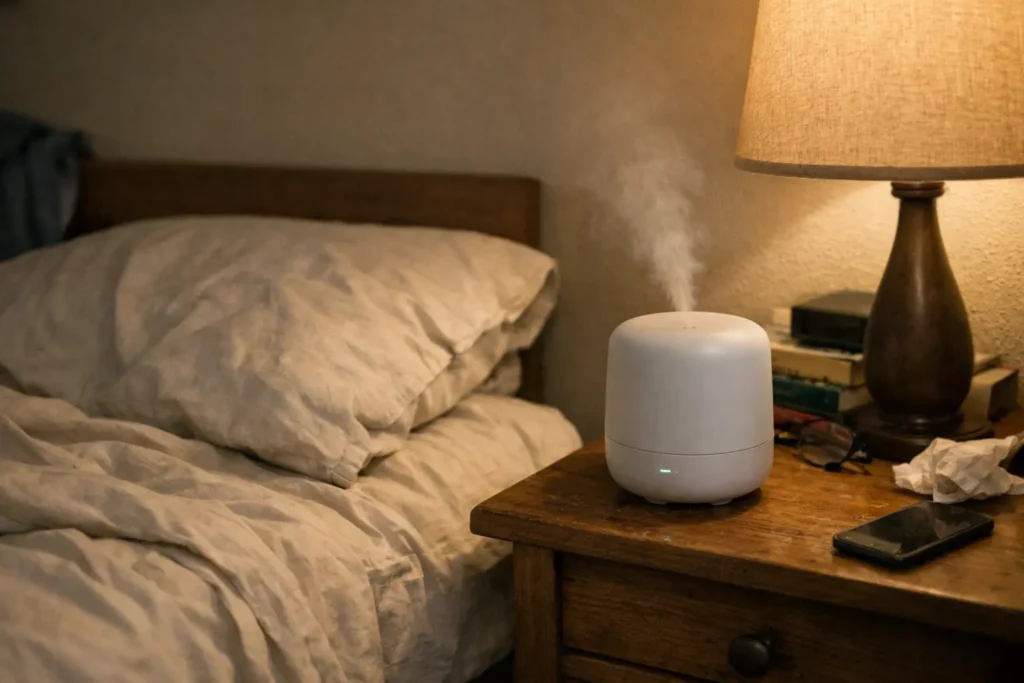
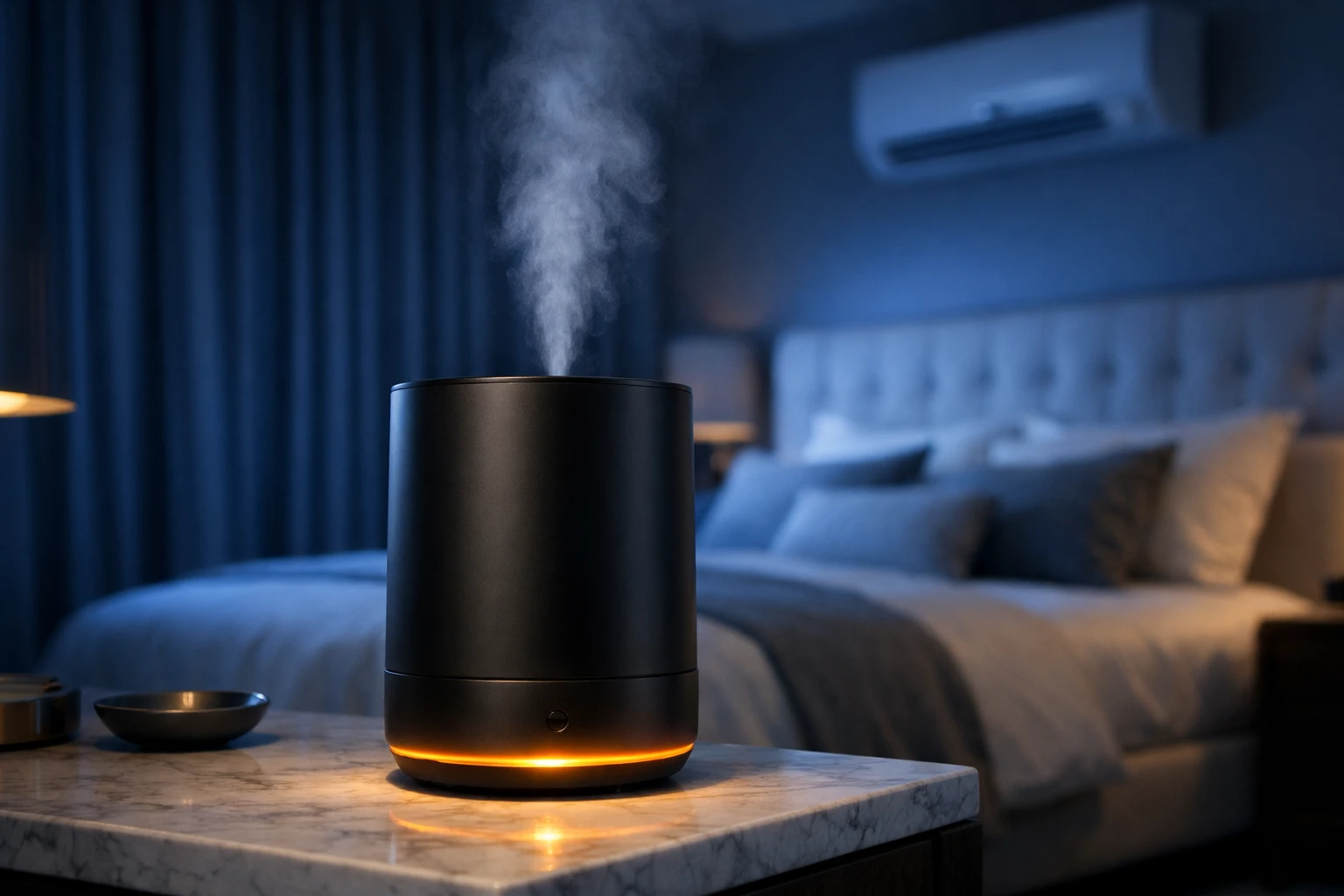
This is where a bedside humidifier quietly changes the atmosphere. It doesn’t make the room damp or heavy. It simply adds a controlled amount of moisture back into the air near your bed, balancing what the AC removes.
The goal isn’t steam. It’s to keep humidity within a comfortable range, usually between forty and sixty percent. In that range, the air feels softer. The throat feels less irritated. Skin doesn’t lose moisture as quickly.
Because the device sits close to where you sleep, it affects the air you actually breathe during the night. You’re not trying to humidify the entire house. Just your immediate sleeping environment.
Also read: Why Some People Are Quietly Switching to Sunrise Alarm Clocks
Small changes people notice first
Most people don’t notice a sudden change. Instead, they pick up on small differences.
Mornings feel smoother. You don’t immediately reach for water. Lips feel less tight. The nose feels clearer. Over a few weeks, skin can feel more balanced, especially if you already use skincare products that tend to increase dryness.
It’s the kind of change you notice more when it’s missing. Turn the humidifier off for a few nights, and the dryness starts to come back.
It’s not just about skin
While skin comfort is a common reason people try a bedside humidifier, breathing comfort often matters more. Dry air can slightly thicken mucus, which can make the nose feel blocked even when you’re not sick. A small amount of added moisture helps keep nasal passages more comfortable through the night.
If you run both an AC and a ceiling fan, the drying effect increases. Air circulation speeds up moisture loss from the skin and throat. Using a humidifier helps bring the room back to a more neutral balance.
People who talk a lot during the day, work in air-conditioned offices, or already experience mild sinus sensitivity often feel the difference more quickly.
Choosing something that doesn’t disrupt sleep
Since this sits next to your bed, it has to be quiet. Most modern units are designed for bedrooms, producing a soft mist with minimal sound. A small tank that lasts through the night is usually enough. You don’t need a large, industrial device.
Placement matters. Keep it slightly away from the wall and not directly against electronics. A stable surface on the bedside table works best. The idea is to create a comfortable pocket of air around your sleeping area.
Read more: Electric Heating Pads Quietly Becoming a Nighttime Comfort Gadget
Keeping it simple and clean
Like any device that uses water, maintenance matters. Fresh water each day and regular cleaning help prevent buildup inside the tank. It doesn’t take much effort, just consistency.
Using distilled or filtered water can reduce mineral residue. There’s also no need to run it at maximum output. Moderate settings are usually enough for a standard AC bedroom.
More people are adding one quietly
There’s no big marketing push behind this shift. It mostly comes from personal experience. Someone notices their mornings feel better. A friend tries the same thing. Over time, it simply becomes part of the bedroom setup, like blackout curtains or a white noise machine.
Sleeping in an AC every day is common now, especially in warmer cities. The cooling is essential. But the dryness doesn’t have to be.
A bedside humidifier doesn’t change your routine. It doesn’t require a lifestyle adjustment. It simply corrects what constant air conditioning takes away.
When that balance returns, the room feels less flat and mornings feel less dry. You start noticing it without thinking much about it.